Wealthy universities, facing steep endowment tax hikes, cut PhDs and libraries
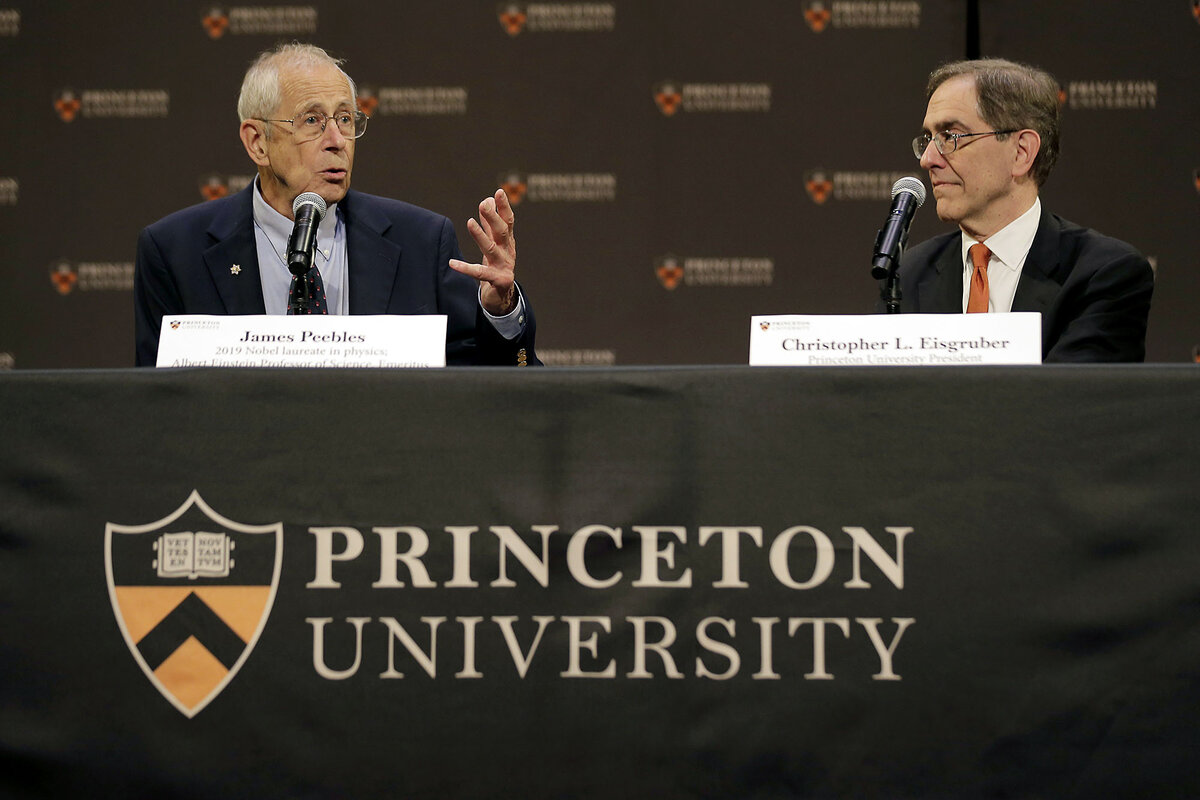
Princeton University President Christopher Eisgruber lobbied members of Congress repeatedly to deter an increase in the endowment tax on colleges and universities. Instead, when the One Big Beautiful Bill Act passed last summer, Princeton became one of a handful of schools whose endowment tax ballooned.
Now, President Eisgruber is preparing his institution for change as it prepares to pay an endowment tax of 8% on net investment earnings next year, up from 1.4%. He’s asked department heads to make budget cuts and says more could come. He announced this month that over the next decade, Princeton expects to lose $11 billion in endowment investment earnings.
“Princeton will continue to evolve, but in the future it will more often have to do so through efficiency and substitution rather than addition,” Mr. Eisgruber wrote to the Princeton community on Feb. 2, in his “State of the University” letter.
Why We Wrote This
Some prominent U.S. universities are paring back campus spending in response to endowment tax hikes passed by Congress and the Trump administration’s drive to reform higher education.
Schools that are expected to pay the new top-bracket endowment tax rate include elite universities with billion-dollar endowments, such as Harvard, Princeton, the Massachusetts Institute of Technology, Stanford, and Yale. Leaders at those schools and other institutions facing smaller, but significant, tax hikes are taking steps now to prepare for the tax hit ahead. Actions include cutting spots in doctoral programs and scaling back campus libraries.
Universities are making these adjustments as the Trump administration continues its sweeping efforts – through lawsuits and the withholding of federal research funding – to reshape university cultures to be, as government officials describe it, more receptive to conservative viewpoints and more oriented toward career training.
 Seth Wenig/AP/File
Lynn Cooley, dean of Yale University’s Graduate School of Arts and Sciences, says that her school is cutting doctoral programs across the board by lowering admissions targets in response to the coming tax.
She worries that “fewer discoveries will emerge” as a result, and “fewer curious, creative, motivated young people will have access to the education needed to carry out rigorous research that benefits lives across the region, country, and globe,” Dr. Cooley wrote in an email to the Monitor.
Alternatively, Mark Schneider, a senior fellow at the conservative American Enterprise Institute, believes the endowment tax will force universities to adapt to market realities. He says the United States is overproducing doctoral students in obscure fields and that Congress could instead allocate endowment tax revenue to workforce programs at regional universities.
“Billions of dollars go into [college and university] endowments, and now that they’re going to be taxed, shouldn’t the Congress decide where that money should go?” Mr. Schneider says. “Should it go to Harvard? Or should it go to a regional campus where we’re training people for jobs in the future?”
“Only a very small part of the American population are in these [elite] schools,” he adds. “Most students go to schools within 50 miles of their house.”
How the endowment tax is changing
Congress initially set the endowment tax on private colleges’ and universities’ investment earnings at 1.4% in 2017 during President Donald Trump’s first term. Last July, Congress included significant hikes in that rate in its tax-and-spending bill, which the White House championed. The new structure includes rates of 1.4%, 4%, and 8%, depending on each school’s endowment size and student population.
The new tax law applies to private, nonprofit colleges and universities with minimum endowments of $500,000 to $750,000 per student. Schools with endowments of $750,000 to $2 million per student will pay a 4% tax, and those with endowments of more than $2 million per student will pay 8%.
Colleges and universities with a total enrollment of 3,000 or fewer students are exempt from the new tax rates, which go into effect this year.
The American Enterprise Institute estimates that about 20 universities will be subject to the endowment tax in the first year. Harvard, Princeton, MIT, Stanford, and Yale, all of which have endowments worth tens of billions of dollars, will be taxed at the highest rate. Harvard, which leads with a $53 billion endowment, will have the highest bill at $368.2 million, followed by Yale with $280 million and Princeton at more than $217 million, according to AEI estimates.
The money will flow into the U.S. Treasury’s general account, which acts like the U.S. government’s checking account. Funds there are managed by the Treasury Department, with expenditures allocated by Congress.
What actions are universities taking now?
After news of the new tax rate hit, Stanford University announced that it would lay off 363 people. Other schools have taken similar measures.
Dr. Cooley at Yale says the Graduate School of Arts and Sciences now has a smaller budget as a result of the new endowment tax. University officials estimate their new endowment tax bill will exceed the annual budgets of eight of Yale’s 15 schools combined.
As a result, hits to Yale’s graduate programs will include a 13% reduction in Ph.D. students over the next three years. Enrollment in science and engineering doctoral programs will decrease by 5%, a smaller drop because those departments receive more research and foundation funding and are less reliant on the university’s endowment.
MIT in Cambridge, Massachusetts, is also feeling the crunch from the higher tax rate. At the end of the fall semester in 2025, President Sally Kornbluth and other administrators sent a note to the school community outlining an expected $300 million annual cost to the university from the endowment tax and federal research funding cuts.
Her note referenced changes to the institution’s library system, including layoffs, the closure of two service desks, and a shift to digital-first material. MIT will also end leases for office space and freeze merit raises for employees earning more than $85,000, except in the case of promotions. Dr. Kornbluth said that MIT is looking for ways to increase revenue through avenues like fundraising and in-person and online offerings.
“Taken together, the framework we’ve outlined will allow MIT to navigate these rough financial waters while maintaining its famous momentum,” the letter read. “But – as the last year has demonstrated – the policy weather could certainly grow worse. We are preparing scenarios for that too.”
On the tax bubble
Some schools, like Colgate University, sit on the edge of the endowment tax threshold. The liberal arts school in central New York has a student enrollment of about 3,000 to 3,200. As of February, its endowment stands at $1.44 billion. That puts the university close to the 1.4% bracket.
“There are no reasonable nor responsible measures to avoid the tax,” says Joseph Hope, Colgate’s senior vice president of finance and chief investment officer, via email. “When we eventually join the group of schools subject to this tax, it will be because we have achieved a period of robust growth that directly enhances our ability to support our academic mission.”
Mr. Hope says that Colgate administrators have not yet discussed lowering enrollment below 3,000 students to avoid having to pay the tax.
“Our priority is delivering a world-class residential liberal arts education,” he says, “rather than letting tax thresholds dictate what we do.”