Voting rights – and wrongs: How America struggles with uncomfortable truths
The Supreme Court usually issues its most consequential rulings in June, at the end of a judicial term. Even with a number of prominent decisions made this term, I can’t shake the ramifications of the court’s decision and opinion on Louisiana v. Callais in late April.
The ruling concerning a redistricting map in Louisiana feels like a moratorium on Black voting rights. “Gutting” and “eviscerating” are synonyms, but the former is so overused that it has taken away from the urgency of the court’s decision to narrow the ability of states to use race as a factor in drawing congressional districts.
I share the indignation of those who mourn what has happened to the Voting Rights Act. I’ve also taken the time to read the majority opinion, the concurrences, and the dissents – all 92 pages of what the court had to say on the case.
Why We Wrote This
Viewing the Supreme Court’s recent voting rights decision through the lens of history, questions arise about whether America is honest with itself about racial inequality.
I would recommend such reading for anyone. I can say with great certainty that one of America’s greatest and most pervasive lies has grown beyond our control.
The lie is that America harbors a society that is mature about race. Repeatedly, Justice Samuel Alito, who wrote the majority opinion for Louisiana v. Callais, argued it was crucial to separate “race from politics” and placed the burden of responsibility to protect voting rights on plaintiffs, as opposed to the government itself.
“First, vast social change has occurred throughout the country and particularly in the South, which have made great strides in ending entrenched racial discrimination,” Justice Alito wrote, before he cited improvements in technology to draw maps and a “full-blown two-party system” where there is “frequently a correlation between race and party preference.”
It is a lie that persists, buoyed by the presidency of Barack Obama and the temporary gains of the Black Lives Matter movement. But the lie was turned on its face in what felt like moments after the ruling, when Southern states rushed to respond.
In South Carolina, Alabama, and Florida, courts and legislatures are either locked in battles or have deeply considered maps that would break long-standing Black-majority districts.
Louisiana Gov. Jeff Landry suspended state House primaries to redraw congressional maps. In Tennessee, scenes that looked more like 1876 than 2026 broke out, most notably when Democratic state Rep. Justin Jones walked out of the state house chamber with a burning likeness of the Confederate battle flag. “We will not go back,” the makeshift symbol read, even as legislators approved a controversial map that carved up the state’s only Black-majority district.
It is understandable that people want to discuss the court’s opinion at length, and criticize it as a departure from democracy. I juxtaposed its decision with recent celebrations of America’s 250th anniversary. How could people possibly celebrate American ideals and democracy while its highest court devalued the voting rights of a select group of people?
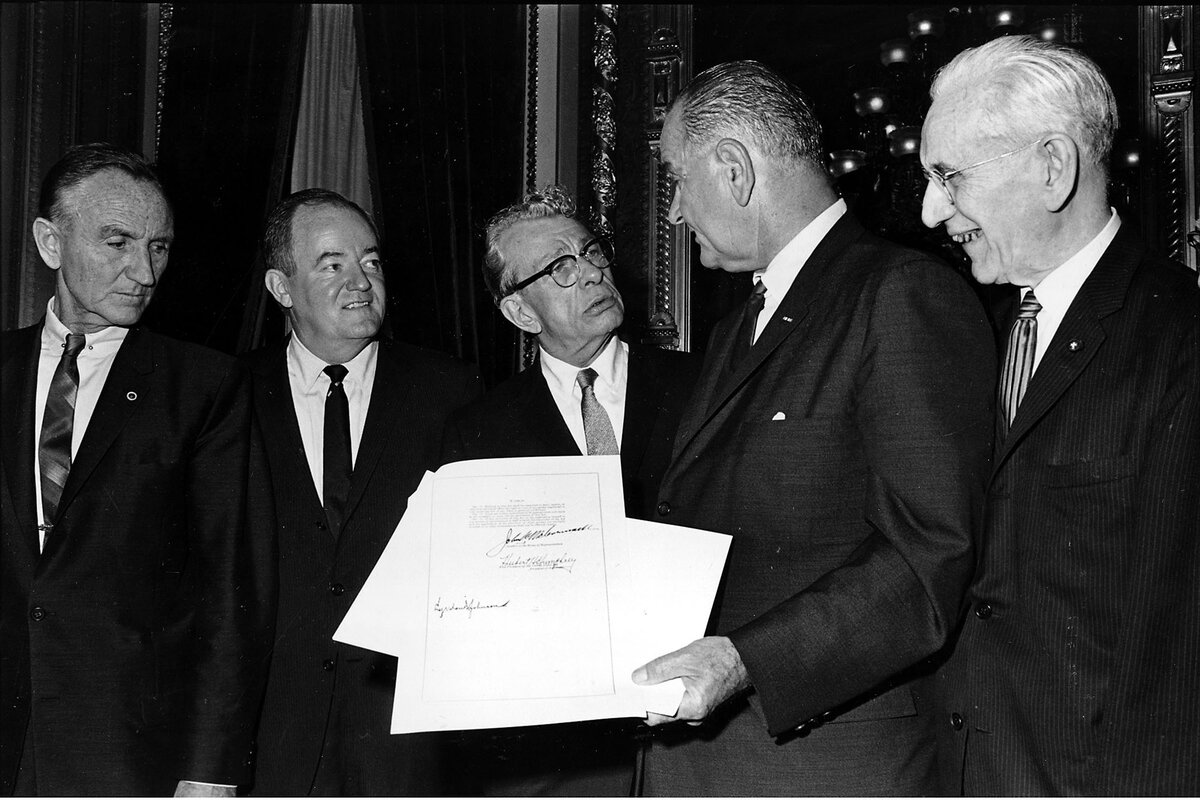 AP/File
Even the prevailing opinion (un)intentionally felt anti-Black in its reorienting of the Constitution, which (in)famously left out Africans in America:
In isolation, “opportunity” could refer to either a desired outcome or a chance to achieve that outcome. As used in §2(b), however, “opportunity” must mean a chance to achieve a desired result, because the Voting Rights Act does not guarantee equal outcomes. See White, 412 U.S., at 765-766.
“See White,” is a reference to former Supreme Court Justice Byron White, where the ruling gave credence to the idea of “totality of circumstances,” a legal method in which a decision maker reviews all of the facts and not a myopic perspective. That totality should review the obvious: that America was built on a foundation of whiteness and has, at best, struggled to implement the diversity that it has prided itself upon.
“No nation rose so white and fair: None fell so pure of crime,” reads a Confederate monument in downtown Augusta, Georgia, that I pass practically every day. It is in memoriam to the Confederate soldiers, who in 2026 are not seen as treasonists, but as heroes, despite their profound opposition to the Union – these United States.
This brings me to the dissent, written by Justice Elena Kagan:
Under the Court’s new view of Section 2, a State can, without legal consequence, systematically dilute minority citizens’ voting power. Of course, the majority does not announce today’s holding that way. Its opinion is understated, even antiseptic.
Justice Kagan continues:
This Court first construed the amended Section 2 in Thornburg v. Gingles, establishing there a framework – like the new statute itself – based on White.
The dissent notes that the Voting Rights Act was “born of the literal blood of Union soldiers and civil rights marchers,” then notes the ratification of the 15th Amendment before it fast-forwards to the Civil Rights Movement and the present unrest. The lack of context between the 1870s and the 1960s unintentionally perpetuates the lie about race and we should all ...
... slow ...
... down.
I have written at length about the Hamburg Massacre, how it happened in practically my own backyard, and the brutality of violence that led to the Compromise of 1877 and the rise of Jim Crow. What I haven’t mentioned as much is how the violence of July 1876 led to a stolen election that following November, and how it provided a memorial for treasonists, as well as a blueprint for Jan. 6 and what has followed. It was a reorienting of the American standard, which linguistically and functionally has been code for “whiteness.”
Look at how we characterize nonwhite majority districts – “Black-majority” or “minority-majority,” even though the global majority leans heavily toward a nonwhite demographic.
It is difficult to separate the Supreme Court decision from sympathizers of Jan. 6, whether it is Phillip “Bert” Callais, the lead plaintiff, or Ginni Thomas – the wife of Justice Clarence Thomas – who famously told the Jan. 6 select committee that she regretted her texts to then White House Chief of Staff Mark Meadows about the 2020 election. Justice Thomas concurred with Justice Alito’s opinion.
In late February, Georgia state Sen. Harold Jones, the Democratic minority leader, introduced legislation to establish a “comprehensive framework” to prohibit voter suppression. This month, in response to the Louisiana ruling, Georgia Republican Gov. Brian Kemp called for a special legislative session in July to focus on redistricting. Five Georgia congressional districts are held by Black representatives.
“Actually, I hate to have to sponsor this bill at this moment,” Senator Jones told me. “This is basically a restructuring of Section 2 and Section 5 in the Voting Rights Act because the Supreme Court has completely gutted them. But think about that, in 2026, we’re having to redo this, and it’s unbelievable, quite frankly.”
He continued, “These are things my parents dealt with, both of them now deceased, and they couldn’t possibly believe that at my age we would still be dealing with voting rights. I’m glad I sponsored on one level and stepped up to do it, but at the same time, look how far we’ve [regressed] to have to present a bill like this.”
Deepen your worldview
with Monitor Highlights.
Already a subscriber? Log in to hide ads.
I’m reminded of the words of Fannie Lou Hamer, who fought tirelessly for the right to vote and ended up at odds with the government: “There’s so much hypocrisy in this society,” she said in 1964. “And if we want America to be a free society, we have to stop telling lies. Because we’re not free, and you know we’re not free.”
Two-and-a-half centuries after America was founded, we are still telling lies. As Mr. Jones told me, it is up to us to uproot that tendency. “I see why people get frustrated sometimes. They say, ‘Nothing changes,’” he says. “You gotta go vote and exercise your rights. The reason why we’re in this predicament is because we haven’t voted.”