With Graham’s death, Trump loses a key ally in Congress
At a time of deep polarization and dysfunction in Washington, Republican Sen. Lindsey Graham had rare abilities – to work across the aisle, to foster agreement on key issues, and, maybe most important, to serve as a liaison between a closely divided Senate and a mercurial president.
No one else in Congress had the kind of relationship with President Donald Trump that Senator Graham had. They were friends and allies, and Mr. Graham, perhaps unique among legislators, could influence the president’s thinking on consequential matters.
Now, after the South Carolinian’s sudden death on Saturday, Washington’s ability to function is cast even further into doubt.
Why We Wrote This
No one else in Congress had the kind of relationship with President Donald Trump that Senator Graham, who died Saturday, had. Mr. Graham influenced the president’s thinking on consequential matters, particularly in the realm of foreign policy.
Major legislative action awaits, including the annual defense bill, funding for the Iran war, renewal of a key overseas surveillance law, and an election administration bill that President Trump keenly wants in place for November’s midterm elections. Senate confirmations are also pending, including for Todd Blanche as U.S. attorney general. The federal government itself risks shutting down if funding isn’t approved by Sept. 30.
Of all the issues in play, none may be more affected by Mr. Graham’s absence than Ukraine and Israel, potentially profoundly so. The South Carolinian believed deeply in both nations’ right to exist and determine their own futures, and it’s unclear if anyone will be able to fill the void.
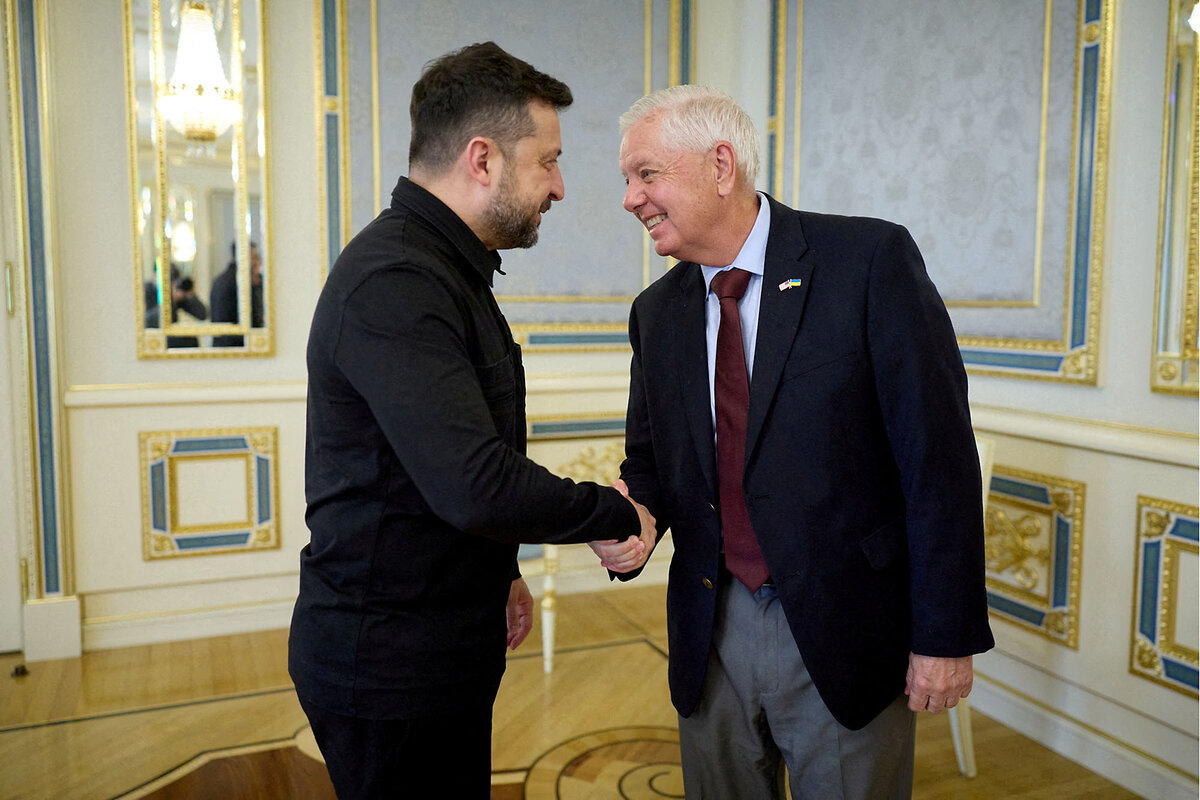 Ukrainian Presidential Press Service/Reuters
The death of Mr. Graham could also heighten the seeming competition between Secretary of State Marco Rubio and Vice President JD Vance on foreign policy matters. Mr. Vance hails more from the isolationist, “America first” wing of the party than does Mr. Rubio, whose more internationalist viewpoint was regularly buttressed by the late senator. Both the vice president and the secretary appear to be gearing up to run for president in 2028.
For now, the mechanics of government move on. On Monday, South Carolina Gov. Henry McMaster was expected to announce who will serve the remainder of Mr. Graham’s term, which runs until early January. On Aug. 11, the state will hold an emergency GOP primary to replace Mr. Graham on the ballot.
The Republican margin of control in the Senate is narrower than it appears, even back at 53-47, after Mr. Graham’s replacement is sworn in. GOP Sen. Mitch McConnell of Kentucky has been hospitalized for the past month, and it’s not clear when he will return to work.
The Republicans also have a lame-duck problem of Mr. Trump’s own making. Two GOP senators lost their primaries to Trump-backed opponents – John Cornyn of Texas and Bill Cassidy of Louisiana – and can’t be counted on to support the president’s position on any given vote. In addition, Thom Tillis of North Carolina, one of many retiring Senate Republicans, is a Trump antagonist whose vote also isn’t a sure thing.
But a larger question looms: Can anyone replace Mr. Graham as the Senate’s “Trump whisperer”? Various names have been floated, but his skill set will be hard to replicate. The late senator displayed a rare combination of firm ideological beliefs – especially as a foreign policy hawk – and flexibility on policy in the name of getting things done. Right before he died, he had hammered out a Russian sanctions package with Sen. Richard Blumenthal, a Democrat from Connecticut.
Mr. Graham had developed what was by all appearances a genuine friendship with Mr. Trump, be it as a frequent flyer on Air Force One or a regular golf companion at the president’s resorts. They spoke often on the phone, including just hours before Mr. Graham passed away Saturday amid a health emergency. The senator had just visited Ukraine.
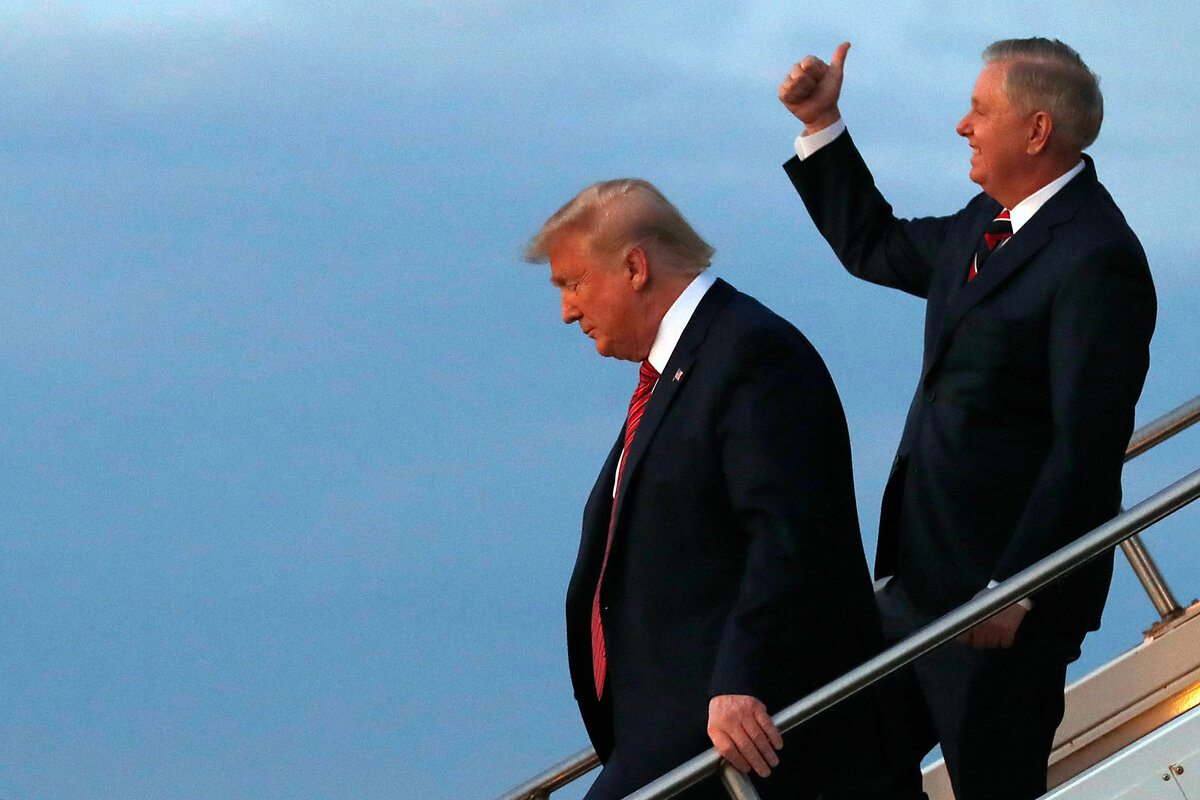 Jacquelyn Martin/AP/File
This close bond, which developed during Mr. Trump’s first term, came as a bit of a shock, after the two competed for the 2016 GOP presidential nomination. Mr. Graham had declared Mr. Trump “unfit for office,” especially after the future president denigrated the military service of the South Carolinian’s close friend, the late Sen. John McCain.
But in the first Trump term, Mr. Graham put the past behind him and worked to help pass the president’s agenda and confirm his nominees, including to the Supreme Court. After the Jan. 6, 2021, riot at the U.S. Capitol, amid Mr. Trump’s claims that the 2020 election had been stolen, Mr. Graham again disavowed the president. And, again, they reconciled.
If Mr. Graham had a superpower, it might have been his interpersonal skills, especially as he advocated issues he cared most about.
“Lindsey was an intense fighter for the causes he believed in,” former GOP Rep. John Shadegg of Arizona writes in an email. He and Mr. Graham were both elected to Congress in the “Revolution of 1994,” when Republicans swept into their first House majority since the mid-1950s.
“He stood out in our class not only for his commitment to his beliefs, but for his understanding of human nature, his sense of humor, his incredible wit, and sense of timing,” Mr. Shadegg adds.
Deepen your worldview
with Monitor Highlights.
Already a subscriber? Log in to hide ads.
Today, Mr. Graham’s absence is likely to be felt keenly, particularly on the foreign policy front. And the stakes are higher than ever. An old-school believer in America as leader of the free world and of global alliances, he was a staunch supporter of NATO.
Mr. Trump, who campaigned on “America first” and an end to “forever wars,” appears at times susceptible to the arguments of the last person he talks to. That person was often Mr. Graham. Now, it’s anybody’s guess who, if anyone, will fill that vacuum.