An Iraqi American director seeds her film ‘Pomegranate’ with love
As a child, Weam Namou was captivated by all 1,037 pages of Margaret Mitchell’s “Gone With the Wind.” She read it just a few years after her family had emigrated from Iraq to Detroit. Ms. Namou says the book allowed her to enter other people’s lives. It helped her understand the United States more deeply than history classes at school.
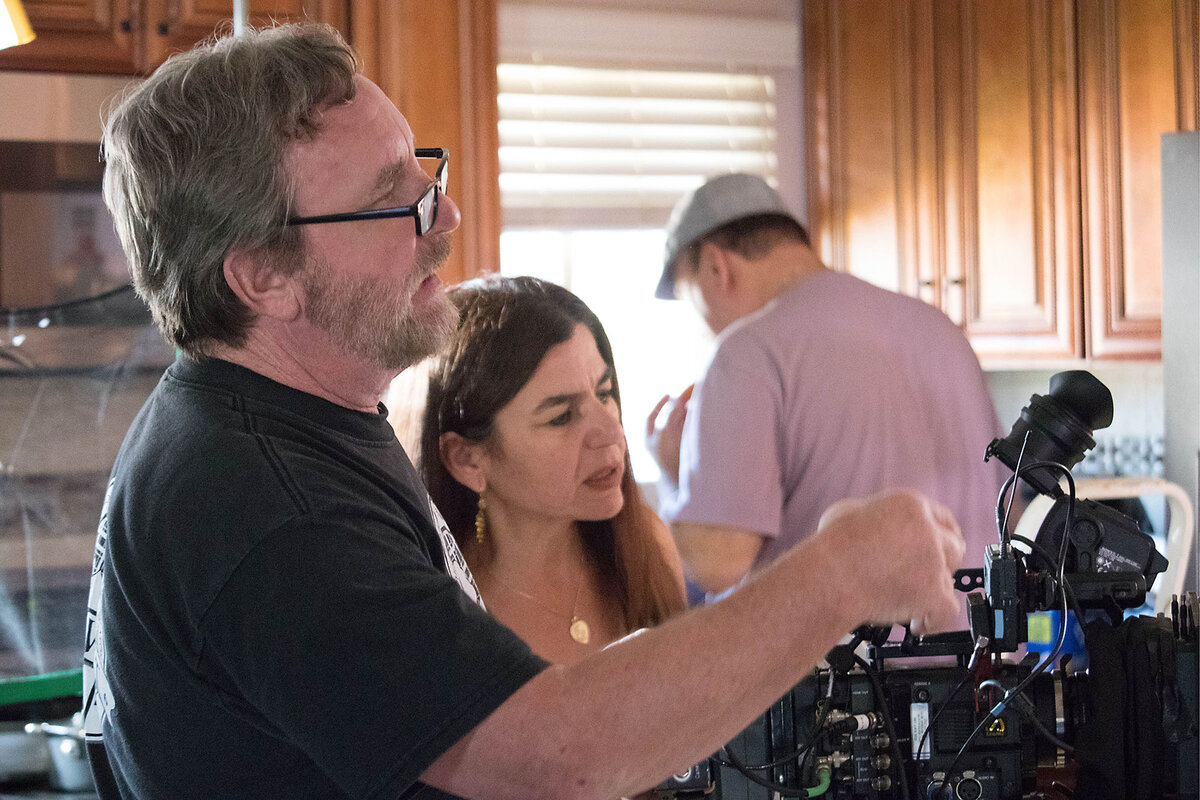
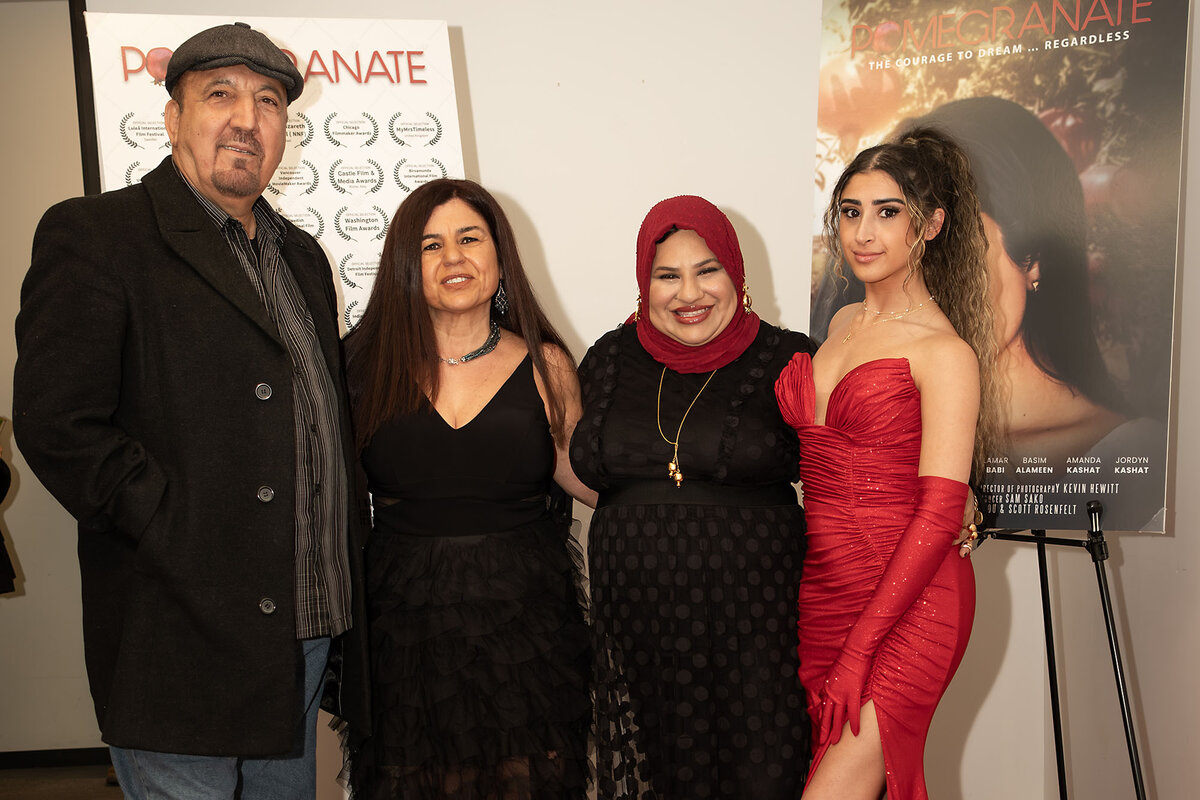
Now, she’s a storyteller herself. Ms. Namou hopes that her recently directed movie “Pomegranate,” based on a novel she wrote, will offer viewers an insight into a slice of America that many don’t get to see up close.
The often-humorous movie follows Niran (Sam Rahmani), a young Muslim woman whose Iraqi family moves to a predominantly Chaldean Christian community in Michigan. Chaldean Christians are members of the Chaldean Catholic Church, which has its roots in present-day Iraq and the broader Mesopotamian region.
Why We Wrote This
Weam Namou wrote a story about a young Muslim woman who moves to a Chaldean Christian neighborhood in Detroit. The film reflects political and social tensions within that community, but also showcases its humor and grace.
Niran pushes against her mother’s expectations. Determined to live on her own terms, Niran asserts her independence by getting her driver’s license and dating anyone she chooses. Niran also clashes with Mary (Natally Boutros), the daughter of a neighboring Chaldean Christian family, because of their different political views during the 2016 U.S. presidential election.
“I would love for everybody to connect to these stories and learn or receive something from it, regardless of their background,” says Ms. Namou, who has also written 27 books.
“Pomegranate” has won over 50 international film festival awards. But it was rejected by some Arab film festivals. The film’s core message, about women making their own choices, was controversial within the director’s own community. Ms. Namou, a Chaldean Christian, says she’s committed to honest depictions of her characters and that she’s motivated by love.
The Monitor talked with Ms. Namou about the movie, which is now available to view on Amazon Prime, Apple TV, and YouTube. This interview has been edited for length and clarity.
 Weam Namou/Ascot Media Group, Inc.
Why is telling stories about people from the Middle East important to you?
A lot of Middle Easterners, they feel frustrated that our stories are not heard because you have a pocket of people that are louder and have certain agendas and mentalities. And what ends up happening is that it ends up looking like we all have the same beliefs. … This story for me was an opportunity to show us in a more authentic way, and to have the story be led by women.
“Pomegranate” grazes touchy subjects, like Niran wrestling with traditional Islamic practices. Some parts of the Arab world had negative reactions to the book and script. How did you navigate these reactions?
Before [the film’s release], I think I still had these fears of like, “How do I navigate this?” Here I am, I’m making this film, for the love of this community. … Then I realized, well, I can still navigate it by being honest and coming from a place of love. I can do both.
Why did you stick to honest portrayals despite early backlash?
The idea that we can showcase our viewpoint, whether through books or whether through films, or what have you, opens a door for discussion … meaning that we can say, “Hey, is this true? Can women really make that choice? Why should it be so difficult? What’s the pressure behind it?” When you close that door, right there you’re saying, “Well, no, they don’t really [have a choice].”
Why did you decide to set the film during the 2016 U.S. presidential election?
I was saddened seeing people really going at each other … on the verge of hating each other over their differences and political views. I hated seeing that because I came from a region where you get punished for having different political views, and I never want to see that in the U.S. ...
When we would say, “quiet on the set” and everybody would listen to the lines that were being shared … we were actually listening. We were actually having the opportunity to listen to somebody that could be a parent that has different political views, or a sibling, a boyfriend, girlfriend, a spouse, and that’s OK. Like, yes, go ahead and argue about it. Be sassy like these two girls [in the film]. Do whatever you need to do. That’s all OK. But hating each other over that, or getting to the point where you’re disconnecting the conversation, that’s very dangerous.
 Weam Namou/Ascot Media Group, Inc.
Even with some of the harder-to-talk-about subjects, humor is present throughout the film. Why?
It takes you coming into our homes and experiencing who we really are to see that side of us, the love. The humor that does exist. And I love our community for that. I went to Iraq in 2000 during the sanctions and people were in such a dire situation, but I would go into homes and find so much laughter.
And how can I let such material go? I love this. I love my people. I can’t even catch up with the interesting stories that they have. … I think if you take yourself too seriously and analyze everything … that makes you forget that world.
Has the movie resonated with Arab audiences, and if so, what was that like to see that impact?
Deepen your worldview
with Monitor Highlights.
Already a subscriber? Log in to hide ads.
The first time I did an Arabic interview, she emailed me after and said things to me that brought me to tears. And I’ve had a lot of these kinds of interactions one-on-one where, especially women, will tell me how much it meant what they saw and how they felt and how they appreciated even the comedy, but especially the idea that … they feel they can have a choice.
I’m cheering them on, whatever decision. The mom, you want to stay in a hijab, I am cheering you on. The daughter, you want to take it off, I’m cheering you on. I’m just a cheerleader for people who are wanting to find their voices and their independence in this country and their freedom. And to do it without hurting anybody. And that’s exactly what [Niran’s] family did. They didn’t hurt each other. They were able to walk away, make their decisions out of courage and love.