US government searches for migrant children as deportations mount
An alphabet soup of U.S. agencies is tracking down immigrant children who arrived in this country without a parent or guardian and were eventually released from government custody.
The Trump administration says it wants to fight fraudulent sponsors, protect vulnerable minors from abuse, and deport those who have committed crimes. Meanwhile, immigrant advocates say the government is complicating children’s access to lawyers as it steps up efforts to send many of them home.
The government has detained unaccompanied minors and sent them back to their countries at about three times the rate of the first Trump term, according to a recent ProPublica analysis.
Why We Wrote This
As the White House strips away lawful status from millions of immigrants, it’s preserved some humanitarian concern for kids it claims the last president lost. Still, the government has sought to deport many children, and to discourage others from arriving.
Since last year, multiple federal agencies have collaborated through a Washington “war room” to locate the children, according to documents and statements by officials. The government has also enlisted state and local agencies in the search.
 Dario Lopez-Mills/AP/File
Knocking on doors at last known addresses has evolved into extensive data sharing and collaboration, modeling President Donald Trump’s broader whole-of-government crackdown on illegal immigration.
The administration has promoted its efforts as safeguarding vulnerable, “lost” children – and tackling claims of widespread immigration fraud. Immigrant advocates worry the goals are to intimidate children from participating in their immigration cases and to ramp up deportations.
Defining “lost”
Just how many of the minors are actually missing, and what that means, is disputed.
Thousands of unaccompanied minors crossed the southern border each month during the Biden presidency; hundreds still cross monthly.
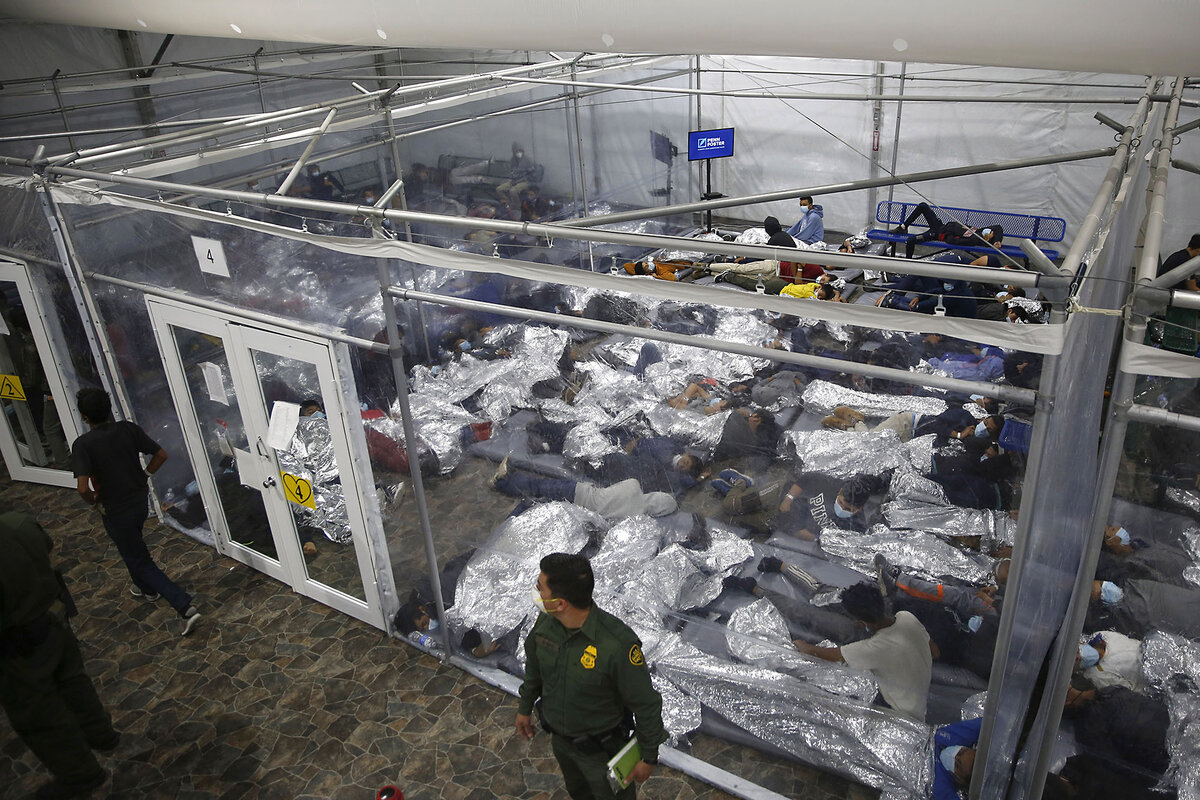
Once border authorities stop an unaccompanied minor, the government has 72 hours to hand them over to the Department of Health and Human Services.
Numbers of those unaccounted for cited by the Trump administration appear to refer to children released from government care between 2019 and 2023, but who had not yet received immigration court dates – about 291,000, according to a 2024 Department of Homeland Security inspector general report. Poor communication between the Office of Refugee Resettlement (ORR) – the agency charged with caring for minors while they are in custody – and Immigration and Customs Enforcement was a factor.
But federal agencies’ lack of awareness about a particular child’s whereabouts to notify them of a court date does not necessarily mean the child is missing.
 Manuel Balce Ceneta/AP
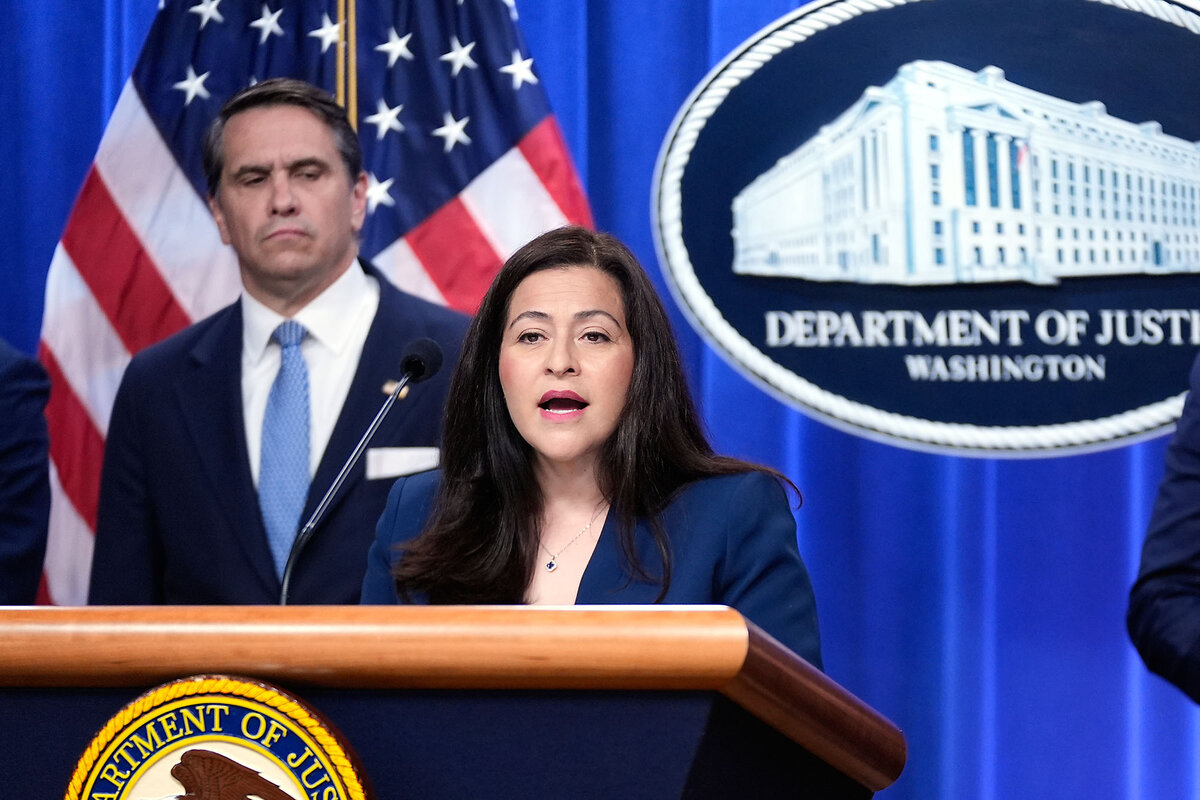
ORR says it has “located” more than 150,000 unaccompanied children. At a June news conference, Angie Salazar, the ORR’s acting director, said some were “sexually assaulted, others deceased, and some committing heinous crimes” after their release to unvetted sponsors.
“When the government lacks reliable contact information or an effective means of tracking children, that is a child welfare failure,” she said.
Jen Smyers, a former deputy director of ORR under President Joe Biden, says the Biden administration inherited a messy database of sponsor information that resulted in mistaken releases, but her team cleaned up the records system.
“The claim that children were released to unvetted sponsors is factually inaccurate,” says Ms. Smyers.
ORR is pursuing more coordination with law enforcement than it traditionally has, former federal officials say.
The space devoted to locating unaccompanied children at the ORR office in Washington is a “massive room with computers all around,” says John Fabbricatore, a longtime Immigration and Customs Enforcement official, like Ms. Salazar. He joined the Trump administration’s unaccompanied children effort as an HHS senior adviser last year.
ICE, U.S. Citizenship and Immigration Services, the FBI, the IRS, the Social Security Administration, and the Pentagon have all been involved, says Mr. Fabriccatore, whom the Monitor interviewed in June while he was temporarily not employed by the federal government.
“It was mostly fraud analysts that we were looking for,” in terms of help from collaborating agencies, he says.
None of the agencies confirmed its participation. An ORR official said in an email, “Law enforcement and intelligence agencies worked across departments to locate these children and ensure they were safe,” and that the effort continues. The official also said ORR had requested forensic auditors from the Pentagon to review invoices from a legal-services contract.
 Eric Gay/AP/File
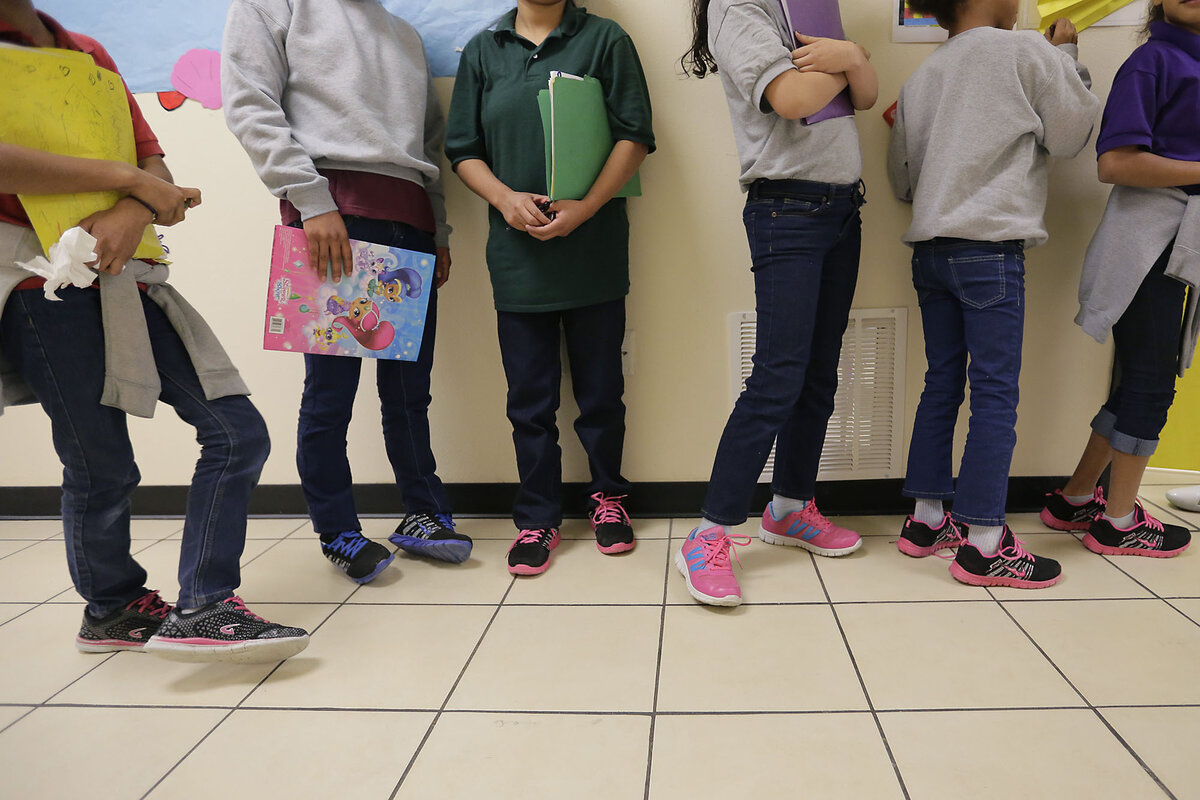
Beyond unaccompanied children who’ve become adults and are committing crimes, deportation isn’t the goal for everyone, says Mr. Fabbricatore. Still, information sharing between ICE and ORR has resulted in thousands of arrests, Reuters reports.
An undated ICE document says the agency collected data on unaccompanied children “from various sources” beginning a week after Mr. Trump’s inauguration last year. The document also says certain ICE officials have access to the HHS records system for unaccompanied children.
ORR says it has long shared data with DHS, which oversees ICE, on unaccompanied children and their sponsors.
An Oklahoma model
Last November, Homeland Security announced that ICE’s local and state law enforcement partners were involved in welfare checks of unaccompanied children.
In Oklahoma, state troopers accompanied ICE agents on a door-knocking campaign at first. But that approach didn’t succeed, says Tim Tipton, commissioner of the state’s Department of Public Safety.
“People just don’t answer the door,” he says.
Mr. Tipton says he pitched an alternative to ICE. Why not put personnel from the highway patrol’s Child Abduction Response Team on the case? After all, he says, those CART officers are trained to handle kids in sensitive situations.
ICE eventually shared the target list with the state, according to Mr. Tipton. Now, he says, CART officers locate sponsors on their own, generally avoiding door knocks. After calling or texting, troopers set up an appointment to interview the sponsor and to check on the child and their living conditions. Information is ultimately reported back to ICE, says Mr. Tipton.
Oklahoma has located a couple hundred children this way – or at least verified they’re no longer in the state, says the commissioner. His team isn’t pursuing immigration enforcement, he says, but ensuring that kids are all right.
“If we’re doing a welfare check on a kid and there’s signs and indicators of human trafficking, of sex trafficking, of child abuse, then we’re going to take immediate law enforcement action,” Mr. Tipton said in June.
So far, his team hasn’t removed any unaccompanied children from Oklahoma homes over signs of abuse, he says.
ICE did not respond to several questions, including about state and local involvement in welfare checks. The president’s pick to be the next ICE director, Lance Schroyer, is a retired major of the Oklahoma Highway Patrol.
According to Lt. Mark Southall, a highway patrol spokesperson, Mr. Schroyer was “instrumental” in developing the CART plan to locate immigrant children.
 Dario Lopez-Mills/AP/File
Children in limbo
As Health and Human Services works to locate more children, U.S. law requires the agency to secure legal aid for unaccompanied children “to the greatest extent practicable.”
Yet, amid a data-sharing dispute between children’s lawyers and the government, HHS withheld funding from a national network of legal groups. A federal judge in California this month made the government pay.
At the end of July, HHS had let a legal services contract lapse for the Acacia Center for Justice, affecting around 100 subcontractors. Acacia says the network has served more than 20,000 unaccompanied children since late last year.
Whiplash has followed. A Federal Register notice this month said that HHS intended to award up to $150 million to a Texas firm with ties to the Trump administration to provide legal services for children in government custody. On Tuesday, the firm said it “withdrew from consideration.”
Meanwhile, HHS awarded a $244 million no-bid contract to Our Rescue, an anti-trafficking nonprofit whose chief executive, Derek Benner, is a former ICE official. ORR says it tried unsuccessfully to competitively bid the contract. Though it’s unclear whether the nonprofit typically represents children in immigration proceedings, “We welcome this responsibility and are working on their behalf,” Mr. Benner said in an emailed statement.
In a Thursday court filing, the ORR says it awarded a separate agreement this month worth up to $20 million to the U.S. Committee for Refugees and Immigrants. That’s for legal services for children in government custody through at least December. The nonprofit did not respond to interview requests.
Kids stuck in custody
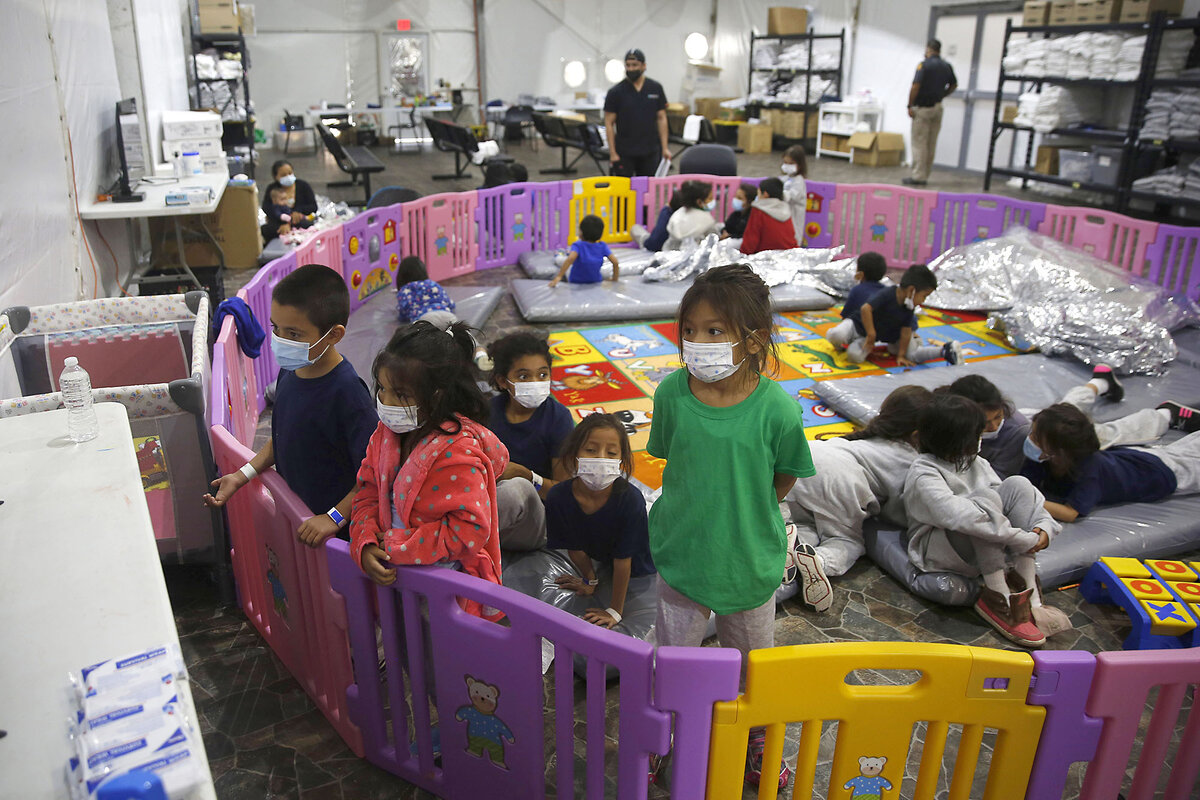
Meanwhile, kids are staying longer in federal custody before release to sponsors.
During the Biden administration, in fiscal year 2024, unaccompanied children stayed in ORR care an average of 30 days. This past spring, the monthly average crested at more than 200 days. Some children’s lawyers say those in custody are increasingly choosing to leave the United States rather than continue waiting for release.
“We are prioritizing child safety over placement speed,” Ms. Salazar, the ORR official, said at the June news conference.
Deepen your worldview
with Monitor Highlights.
Already a subscriber? Log in to hide ads.
Still, prolonged custody of kids isn’t good, Mr. Fabbricatore said at a Heritage Foundation event the same day.
“The longer that they are in care, there’s more mental health issues that we’re dealing with,” he said. “We don’t want that. ... They should be home.”