‘Big, beautiful bill’ was top GOP achievement. Now it’s campaign fodder for Democrats.
About a year ago, the White House touted its One Big Beautiful Bill Act as the “biggest legislative win” of President Donald Trump’s second term.
The bill, commonly referred to as the OBBBA, which primarily combined an extension of the 2017 tax cuts and some new tax breaks with cuts to programs such as Medicaid and food stamps, is the most significant piece of legislation this administration has passed. As recently as June, a news release by Republican House Minority Whip Tom Emmer of Minnesota touted the bill as “the single-greatest victory for working families in history!”
The bill figures to play a key role in this fall’s pivotal contest to control Congress. But even some Republicans say what should have been the party’s major accomplishment is looking more like a liability ahead of November’s midterms. With Democrats predicted to win a majority in the House and possibly in the Senate, voters are hearing two very different descriptions of the legislation that’s affected millions of Americans. Democrats are hammering the healthcare cuts on the campaign trail. Republicans focus on the tax relief.
Why We Wrote This
Political parties usually tout major legislative wins as reasons why voters should stick with them at election time. This year, Republicans are fielding public skepticism about President Trump’s signature bill, and Democrats are using it to craft their own message.
Even there, the GOP might be losing the messaging war, as Democrats have been highlighting that the tax cuts were larger for high-income than for low-income households. Jay Townsend, a Republican consultant who worked in four presidential campaigns but is not involved in any midterm campaigns this cycle, hears people saying that the bill’s tax cuts “‘did not help me, it helped rich people.’”
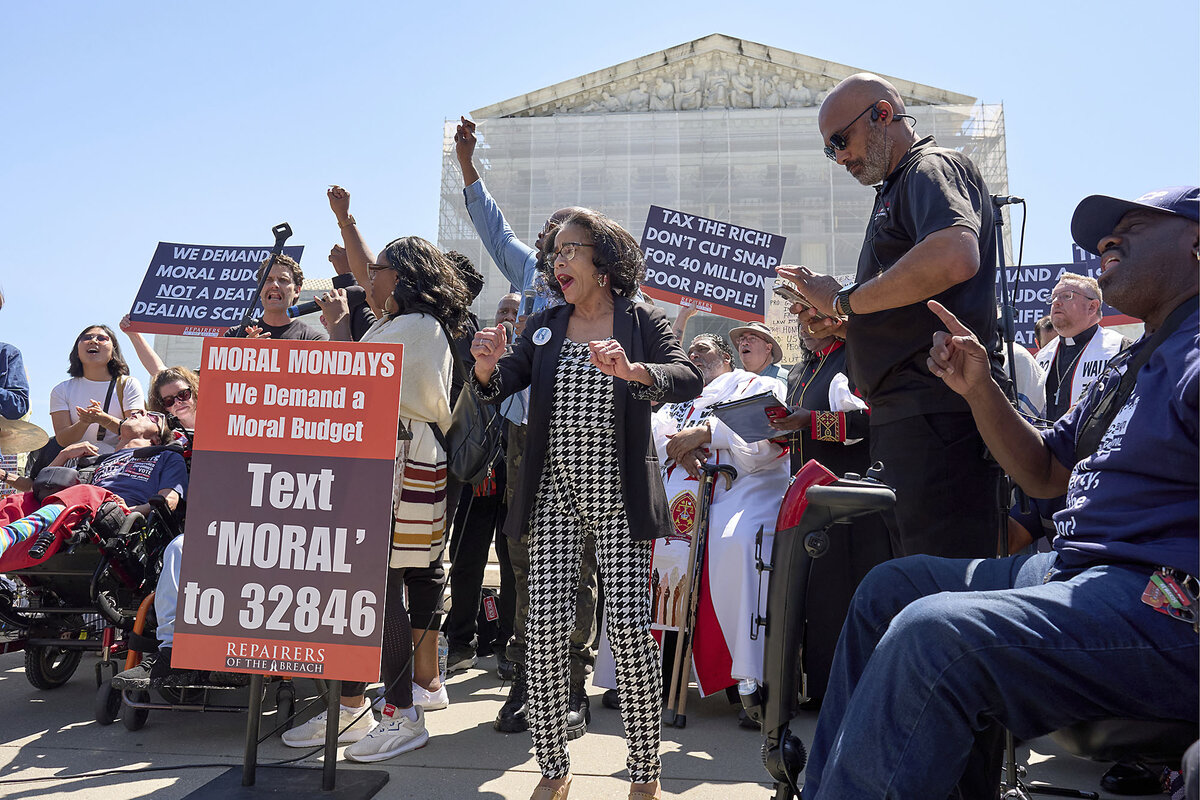
Many of the bill’s most controversial provisions – such as work requirements for people receiving Medicaid – won’t go into effect until after the midterms. Democrats accused Republicans of delaying those changes to avoid the political fallout.
 J. Scott Applewhite/AP/File
But there are signs that some of that political fallout is already happening. A Politico survey in July found that nearly 1 in 3 Americans say the law has made their financial situation worse, and a poll from the same month by the left-leaning Navigator Research found that nearly half say it is making their costs go up. The law is estimated to reduce federal Medicaid spending over the next decade by nearly $1 trillion, and a handful of rural clinics have already shut down, citing future cuts. Democrats say those closures, alongside spiking healthcare premiums, have given their candidates a strong issue to use against Republicans on the campaign trail.
“From what I can tell, nearly every Democratic challenger is using the [healthcare] cuts against Republican incumbents, and in most cases with significant effect,” says Geoff Garin, the president of Hart Research, a Democratic research and polling organization. “There’s very little [Republicans] can do at this point to mitigate the damage.”
Medicaid cuts sway voters
Republicans passed the bill in July 2025 without Democratic support. It extended tax cuts passed during Mr. Trump’s first term in 2017, and added temporary tax deductions for groups such as seniors and workers receiving tips. Republicans such as Sen. Chuck Grassley of Iowa called it a “recipe for economic success.”
On the campaign trail, many Republicans are touting the bill’s benefits – labeling Democrats as the party that rejected tax cuts. Sometimes, the candidates point to the bill; sometimes, to specific provisions within it. Rep. Darin LaHood of Illinois recently mentioned a barber who is benefiting from tax relief on tips – but he also credited the “tax bill” broadly with helping businesses across his district.
“The Republican Party has a very clear difference for America, and that is: Always lower taxes, always American workers first,” Rep. Brian Mast of Florida told CNBC earlier this month.
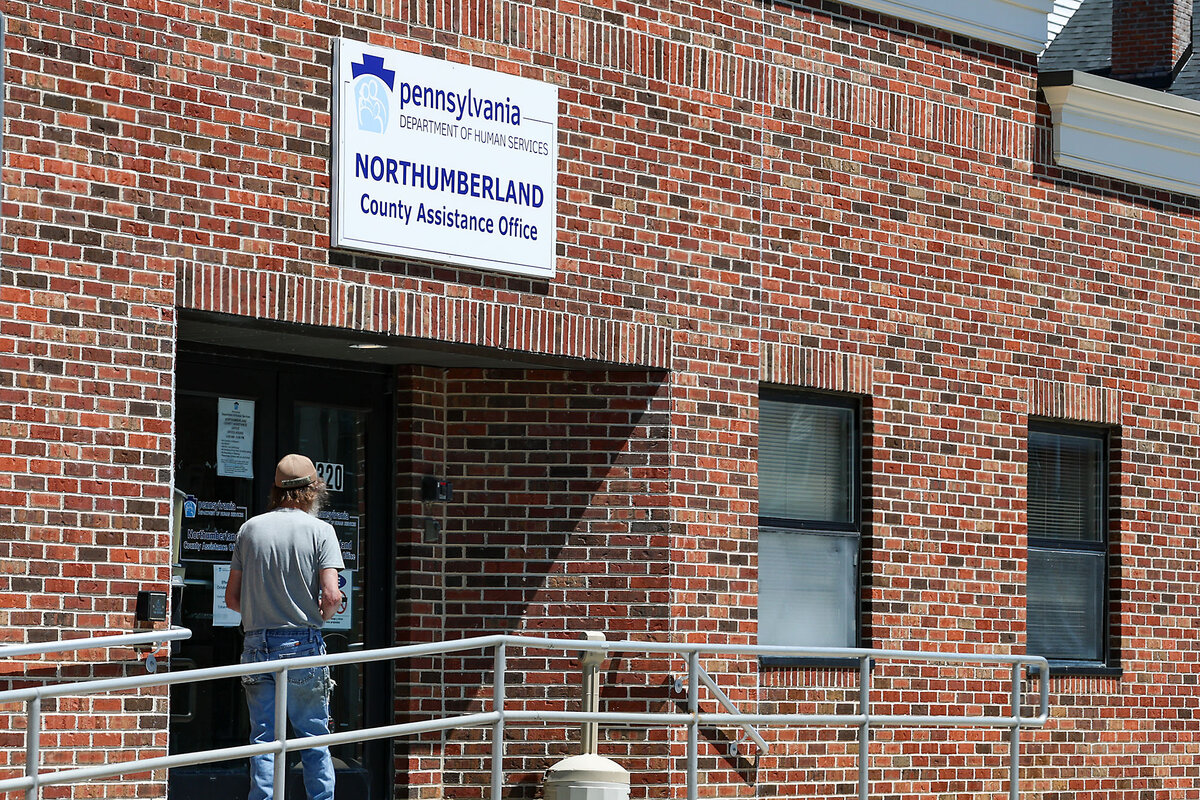
But even as Republicans paint them as would-be tax hikers, Democrats have fastened on to a different part of the bill: changes made to Medicaid and the Supplemental Nutrition Assistance Program, or SNAP. The OBBBA set new work requirements for people to receive Medicaid, cut federal help for states that expanded the program, and ended eligibility for some legal immigrants. Meanwhile, SNAP enrollment dropped by 11% between July 2025 and April 2026 after the law narrowed exemptions and raised the work requirement age.
Americans can expect to see a lot of ads about the Medicaid cuts leading up to the midterms, says Mr. Garin.
“Medicaid? Gutted,” says a May video ad run by Democratic Rep. Greg Landsman of Ohio against his opponent Eric Conroy, who is not a member of Congress but has expressed support for the OBBBA.
 Paul Weaver/Sipa USA/AP
Republicans are pushing back, saying the cuts are helping the nation’s fiscal position by eliminating “waste, fraud, and abuse,” by tightening eligibility and closing what they call loopholes in how states share costs.
Still, the party’s messaging has downplayed the Medicaid provisions. Instead, Republicans emphasize the tax changes, which saved American taxpayers an average of just over $2,200 per filer, according to the nonpartisan Tax Foundation. The Treasury Department says more than 53 million taxpayers claimed things like a new tips deduction and an enhanced deduction for seniors.
But Mr. Garin says that many voters are being hit by the loss of enhanced healthcare subsidies and fear losing their health insurance altogether. Those subsidies expired at the end of 2025 and are not directly related to the OBBBA, though Republicans could have used the bill to pass an extension. Democrats shut down the government last year over the issue, but eventually agreed to reopen it without winning any concessions.
Messaging challenges
The bill has been controversial from the start. At the time of the OBBBA’s passage, it faced widespread criticism from Democrats. A July 2025 Quinnipiac poll found that 44% of Americans thought the bill would hurt rather than help them personally.
The same month, longtime GOP strategist Karl Rove predicted on Fox News that the bill could pose problems for his party in the next round of elections.
“I think it'll have a huge impact on 2026, because, remember, as these changes, particularly the Medicaid changes, come into effect, they’re going to have, people are going to be losing their coverage,” said Mr. Rove.
Just weeks after the bill’s passage, President Trump and congressional Republicans tried to rebrand it, pivoting from the “great, big, beautiful” bill and instead calling it the “Working Families Tax Cuts Act.”
While voters might hold more negative than positive views of the legislation, failure to extend the tax cuts could have posed its own political challenge for Republicans. Polls also show widespread confusion about what’s actually in the bill. In the July Politico poll, about 2 in 5 voters said they had heard of the law but couldn’t explain its features.
Deepen your worldview
with Monitor Highlights.
Already a subscriber? Log in to hide ads.
In a separate survey by Winning the Issues, part of the GOP-aligned Winston Group, almost half of U.S. voters did not think the bill prevented a tax increase on them and their families. That was a key part of Republican messaging as they campaigned to pass the bill last year.
“We’ve seen some Republicans run ads calling this essentially a tax cut, but that’s not how people feel,” says Julie Alderman Boudreau, the director of research at left-leaning Navigator Research. “This [bill] is a huge liability ... for any Republican on the ballot in 2026.”